Social media has grown significantly in the past few years. It has now become a part of our everyday lives. While social media was mainly designed to increase connectivity, it has now become an important tool for activism and raising awareness about political issues. Social movements organizations (SMO’s) often use social media to spread the objective of their movements (Xiong, Cho & Boatwright 2019).
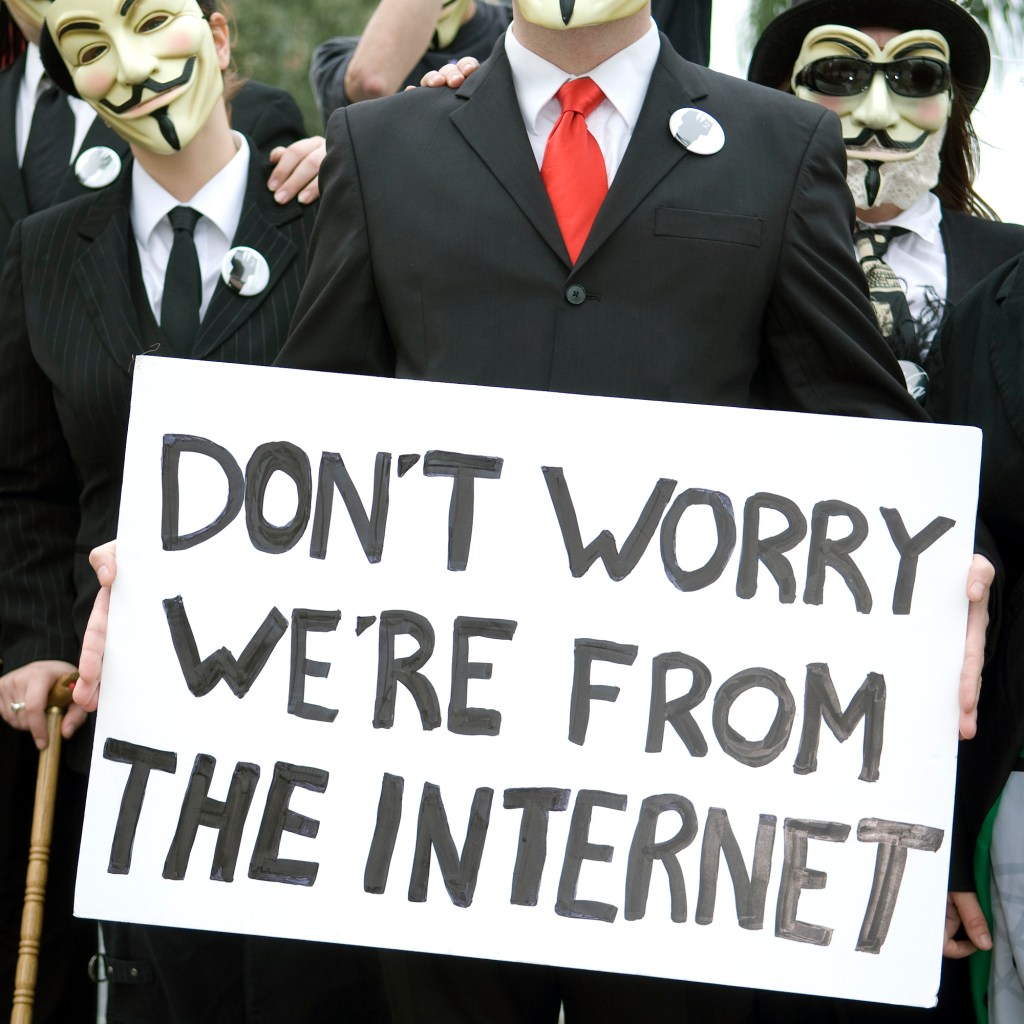
https://www.flickr.com/photos/anonymous9000/4281777022/in/photolist-7wne8L-nMwCwf-8cQwPp-nx4J4Z-dpidaU-7bbtrz-6GjcwH-rRs4Q8-nPrgMJ-sy1sbH-7weqDw-3e2raZ-98wuHq-6rUxWa-6rQfNN-nQNwYN-TFiMBJ-nPhyYz-dn6PLw-8YsY7H-dp9QG6-2cSqHWj-2fDeCxN-eQkqwi-7bhSPn-mbq9J-8926S6-6rnqvr-6rQKhf-TzyLY5-6rRW73-7wSMAM-q2quw-6rYEVb-8Yw1ro-6rRHqJ-6rLzND-6yhdb7-2fHWiZ8-eQknJF-2fHRiRx-TzyQuU-2ejWiDD-v9snNi-WATzHX-7wKWYJ-6rYFjC-RXrc2p-RXma46-7waBji
Since the news on social media is not only from the news agencies but from various alternative news providers such as citizens, non-profit organizations, civic organizations, etc., it increases the scope of news sources. Therefore, it becomes easier for users to encounter news on social media platforms. It has been noted that about 58.2% users of social media platforms like Twitter, Facebook and YouTube encounter news unintentionally (Park 2019).
Social media portrays immense power over political issues often taking up issues that are sensitive or taboo. It provides a platform for people to connect and start discussions. Social media also increase interactivity helping people to connect with multiple people and multiple groups at the same time. Some major examples of such movements are:
#METOO: the movement started with a post from a leading actress to respond to her post with the hashtag in an urge to motivate other women to talk about their experiences with harassment. The movement created a whirlwind, reaching almost every part of the globe. it had such a strong impact, that it led to great personalities ranging from actors to politicians being punished.
#EGYPTIANREVOLUTION or Arab spring: in 2011, the Egypt revolution took place against the president. Social media however, changed the dynamics of the mobilization. the blogs, articles and news that spread due to social media helped the people to gather and stand in solidarity. Social media helped organize events, protests and convey information through its reach. People connected through Facebook groups, through hashtags and protested, resulting in the revolution to be successful. (Eltantawy, Nahed, Wiest, Julie B, 2011).
#BLACKLIVESMATTER: the phrase was first used in a Facebook post by a black community organizer following the shooting of a black 17-year-old boy. The hashtag spread from there to different platforms and became a tool for addressing racism against the people of color. the hashtag has since been used 11.8million times on twitter. Followed by this, people on social media started #AllLivesMatter to address a great issue of humanity (‘History of the hashtag #BlackLivesMatter: Social activism on Twitter’ 2016).

‘openphoto.net’, retrieved September 2, 2019.
https://openphoto.net/gallery/image/view/31518
With these examples, social media has been able to prove the influence it has on people and the power it holds. Social media has changed the face of activism and made it stronger. When these movements started on social media, they became a tool to bring actual change, involving authorities and amending laws. On the other hand, social media faces criticism as the credibility of the information can not be assessed. While most of the information people receive through news channels and newspapers can be counted on, information online cannot be trusted completely. The issue of fake news has led to the credibility of the entire platform to be questioned.
While there are cases of fake news, social media has been able to prove its credibility with the help of movements and the positive impact it has made. Now, it not only connects people but also helps to address issues and make a change.
References:
- ELTANTAWY, Nahed; WIEST, Julie B. The Arab Spring| Social Media in the Egyptian Revolution: Reconsidering Resource Mobilization Theory. International Journal of Communication, [S.l.], v. 5, p. 18, sep. 2011. ISSN 1932-8036. Available at: <https://ijoc.org/index.php/ijoc/article/view/1242>.
- ‘History of the hashtag #BlackLivesMatter: Social activism on Twitter’ 2016, Pew Research Center: Internet, Science & Tech, retrieved September 2, 2019, from https://www.pewinternet.org/2016/08/15/the-hashtag-blacklivesmatter-emerges-social-activism-on-twitter/
- Park, CS 2019, ‘Learning Politics From Social Media: Interconnection of Social Media Use for Political News and Political Issue and Process Knowledge’, Communication Studies, retrieved September 2, 2019, from https://www.tandfonline.com/doi/pdf/10.1080/10510974.2019.1581627?needAccess=true&
- Xiong, Y, Cho, M & Boatwright, B 2019, ‘Hashtag activism and message frames among social movement organizations: Semantic network analysis and thematic analysis of Twitter during the #MeToo movement’, Public Relations Review, vol. 45, no. 1, pp. 10–23.
 ISHA
ISHA 